 Call us :-
+91-8004301267
Call us :-
+91-8004301267 Email: info@drsaurabhjain.co.in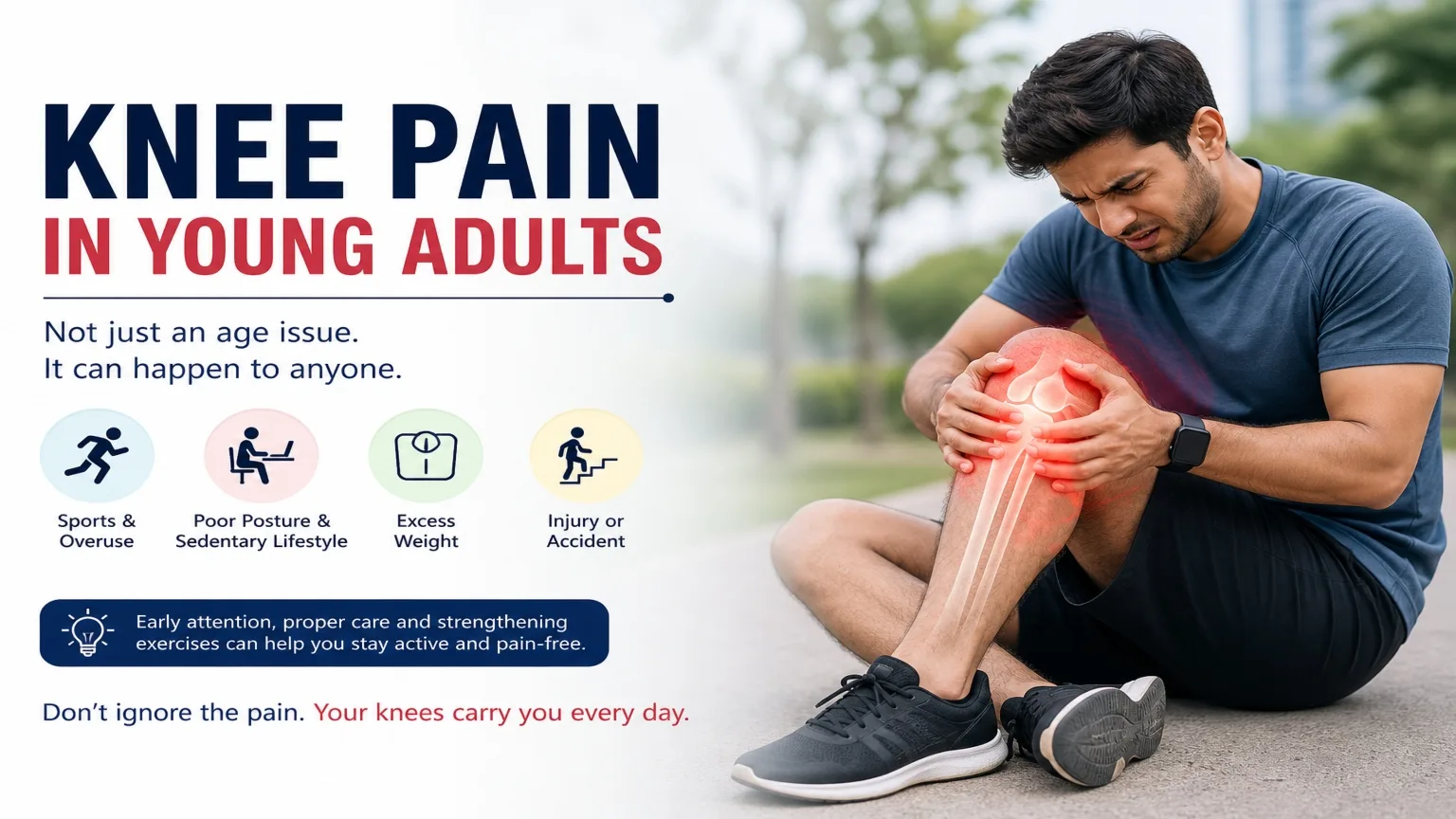
Knee pain is no longer just a complaint you hear from elderly relatives. It has quietly become one of the most common orthopedic concerns among people in their 20s and 30s — young professionals sitting for eight to ten hours at desks, college students carrying heavy bags across campus, gym-goers pushing through heavy squats, and athletes recovering from one sports injury after another.
The reason of knee pain in young age is rarely a single factor. It is almost always a combination — poor posture reinforced by a sedentary lifestyle, muscle weakness caused by inactivity, sudden high-impact activity, or underlying inflammatory conditions that go undiagnosed for months.
What makes this particularly concerning is that many young adults either dismiss the pain entirely ("I'm too young for this") or manage it incorrectly with self-medication. Neither approach addresses the actual cause. The causes of knee pain in young adults are varied, often preventable, and — when caught early — very treatable.
Why Knee Pain Happens in Young Adults
Understanding the root cause is the first step toward effective relief. Knee pain in younger populations typically develops through one of these pathways:
Overuse and Repetitive Stress
Runners, cyclists, and gym-goers often develop knee pain not from a single injury but from repetitive microtrauma. The knee joint is not designed for unlimited high-impact repetition without adequate rest and recovery.
Muscle Imbalance
Weak quadriceps, tight hamstrings, or underdeveloped hip muscles shift the mechanical load on the knee in abnormal ways. Over time, this causes cartilage stress, joint irritation, and inflammation.
Obesity and Excess Body Weight
Every kilogram of body weight translates to roughly four kilograms of additional force on the knee joint during walking. Excess weight accelerates cartilage wear and increases the risk of early joint degeneration in younger individuals.
Poor Posture and Sitting Habits
Long hours of sitting with poor lumbar and hip alignment affect how forces travel down the kinetic chain into the knees. Office workers and students with forward-leaning postures are especially vulnerable.
Sports Injuries
Ligament strains, meniscus injuries, and runner's knee are common among physically active young adults. These injuries, when not properly rehabilitated, can cause persistent pain and joint instability.
Inflammation and Early Arthritis
Conditions like patellofemoral pain syndrome or early inflammatory arthritis can present in young adults, often mistaken for general muscle soreness.
Early diagnosis matters.
Persistent knee pain in young age should not be ignored. Early assessment can prevent long-term joint damage and chronic pain that may become difficult to reverse.
Explore Knee Injury TreatmentKnee Pain While Climbing Stairs: What Does It Mean?
Why does my knee hurt while climbing stairs?
Knee pain while climbing stairs commonly occurs due to patellofemoral pain syndrome, cartilage irritation, weak thigh muscles, or early joint inflammation.
This is one of the most reported complaints in young adults — a sharp or dull aching pain felt around or under the kneecap when going up or down stairs. Understanding why this happens requires a brief look at the anatomy.
When you climb stairs, the kneecap (patella) moves along a groove in the thigh bone (femur). If the surrounding muscles — especially the quadriceps and hip stabilizers — are weak or imbalanced, the kneecap does not track smoothly in that groove. The result is cartilage irritation and pain.
Common causes include:
- Patellofemoral Pain Syndrome (PFPS): Often called "runner's knee," this is the most common diagnosis for stair-related knee pain in young adults. It involves irritation of the cartilage behind the kneecap.
- Cartilage Wear: Even in younger individuals, repeated stress can cause early cartilage breakdown, leading to pain during weight-bearing activities like climbing.
- Weak Quadriceps: When the quadriceps cannot adequately support the knee during the step-up motion, excess pressure falls on the joint.
- IT Band Tightness: A tight iliotibial band pulling on the outer knee can also cause pain specifically during stair use.
If this pain is consistent, worsening, or accompanied by swelling, it warrants a proper orthopedic evaluation rather than being dismissed as a "muscle pull."
Knee Pain When Squatting
Knee pain when squatting is another extremely common complaint, particularly among gym-goers and people who sit cross-legged or on low surfaces.
Deep squats with poor form increase knee stress significantly. When the knees cave inward, the heels rise off the ground, or the back rounds excessively, the force distribution through the joint becomes abnormal — and injury risk rises sharply.
What typically causes squatting pain?
- Ligament Strain: The ACL, PCL, and collateral ligaments can be stressed during deep or incorrectly performed squats, causing localized pain and instability.
- Meniscus Stress: The menisci are the cartilage cushions inside the knee. Deep squatting, especially under load, can compress and tear the meniscus — sometimes without a dramatic injury moment.
- Patellar Tracking Issues: Similar to stair pain, poor patellar tracking during the squat movement causes anterior knee pain.
- Improper Gym Form: Training with weights before establishing proper movement mechanics is a leading cause of squatting-related knee injuries in young adults.
If you experience pain during squats, reduce depth first. Ensure your knees are tracking over your toes, your core is engaged, and your heels remain flat. Consulting an orthopedic doctor before resuming weighted squats is strongly recommended.
Nerve Pain in Knee: Can Nerves Cause Knee Pain?
Yes — and this is frequently overlooked. Nerve pain in knee tissue does not always originate from the knee itself. The nerve supply to the knee travels from the lumbar spine and can be affected by problems at any point along that pathway.
Conditions that cause nerve-related knee pain include:
- Sciatica: Although classically described as back and leg pain, sciatic nerve compression can cause referred pain to the knee area, especially on the outer side.
- Lumbar Spine Issues: A herniated disc at L3-L4 or L4-L5 can compress nerves that supply the knee, producing burning, tingling, or electric-shock-like sensations around the joint.
- Nerve Compression at the Knee: The peroneal nerve wraps around the outer knee and can be compressed by poor posture, crossing legs habitually, or direct injury — causing numbness and weakness.
- Femoral Nerve Neuropathy: Less common, but can cause pain, weakness, and reduced reflexes in the anterior thigh and knee region.
The distinguishing feature of nerve pain is its character — it often feels like burning, tingling, electric shooting, or numbness, rather than the dull or sharp aching of structural joint pain. If your knee pain has these qualities, spinal evaluation is essential alongside joint examination.
Want More Info..
Uric Acid and Knee Pain
Can uric acid cause knee pain?
Yes. High uric acid can cause gout, leading to sudden swelling, redness, and severe joint pain — including in the knees.
However, it is equally important to state clearly: not all knee pain is due to uric acid. This is a common misconception, particularly in South Asian populations where uric acid levels are frequently tested as the first investigation for any joint pain.
Here is what actually happens:
Uric acid is a natural byproduct of purine metabolism. When levels in the blood become too high — due to dietary habits, kidney underexcretion, or certain medications — uric acid forms sharp needle-like crystals (monosodium urate) that deposit inside joint spaces. In the knee, this causes:
- Sudden, severe pain — often waking the person at night
- Visible swelling and warmth over the joint
- Redness of the skin over the knee
- Extreme tenderness where even light touch is unbearable
This condition is called gout, and it is increasingly being diagnosed in young adults due to rising consumption of high-purine foods (red meat, shellfish, organ meats) and sugary beverages like fructose-containing sodas.
Uric acid knee pain tends to occur in attacks. Between attacks, the joint may feel normal. Over time, without treatment, these attacks become more frequent, and permanent joint damage can occur.
If your knee pain is associated with sudden swelling, redness, or severe attacks, a blood test for serum uric acid and proper medical evaluation are necessary. Do not self-medicate gout — treatment needs to be guided by a doctor.Hip and Knee Pain / Knee and Ankle Pain: The Kinetic Chain Connection
The knee does not function in isolation. It is the middle joint in a mechanical chain that runs from the hip down to the ankle. When something malfunctions above or below the knee, the joint pays the price.
Hip and Knee Pain
Weak hip abductors and external rotators — muscles on the outer hip — allow the femur to rotate inward during walking, running, or squatting. This places abnormal stress on the inner knee structures and can cause pain that feels like it originates in the knee but is actually being driven by hip weakness.
Hip joint conditions like labral tears or hip impingement can also cause referred pain down to the knee. Young adults with hip and knee pain simultaneously should always have the hip evaluated first.
Knee and Ankle Pain
Flat feet (overpronation) or ankle instability change the way forces travel upward through the leg. When the ankle rolls inward with each step, the tibia internally rotates, and this altered mechanics reaches the knee, straining the ligaments and joint surfaces over time.
A comprehensive evaluation by an orthopedic specialist that examines gait, foot alignment, hip strength, and ankle stability is far more effective than treating knee pain in isolation. This "kinetic chain" approach is now considered the standard of care in musculoskeletal medicine.
Best Food for Knee Pain
Diet plays a meaningful role in joint health — particularly in reducing inflammation and supporting cartilage repair. Here is a practical breakdown:
Anti-Inflammatory Foods
- Fatty fish (salmon, sardines, mackerel) — rich in omega-3 fatty acids that reduce joint inflammation
- Walnuts and flaxseeds — plant-based omega-3 sources
- Turmeric — contains curcumin, a well-researched anti-inflammatory compound; best absorbed with black pepper
- Berries, oranges, and citrus fruits — high in antioxidants that reduce oxidative stress in joint tissue
- Leafy green vegetables (spinach, methi, broccoli) — provide vitamins C and K, important for cartilage and bone health
Protein Sources for Joint Repair
Eggs, lentils (dal), paneer, chickpeas, and curd provide the amino acids necessary for tissue repair and muscle strengthening around the knee.
Calcium and Vitamin D Sources
- Milk, curd, ragi, and sesame seeds for calcium
- Regular morning sunlight exposure for vitamin D synthesis
Vitamin D deficiency is remarkably common in young urban Indians and directly contributes to bone and joint pain
Hydration
Synovial fluid — the natural lubricant inside the knee joint — requires adequate hydration to maintain its viscosity. Drinking enough water daily is a basic but genuinely important part of joint health.
Foods to Avoid in Knee Pain
Just as certain foods reduce inflammation, others actively worsen it. If you have knee pain — especially related to arthritis, gout, or general inflammation — these dietary patterns deserve attention:
- Sugary beverages and sodas: High fructose content raises uric acid levels and promotes systemic inflammation
- Processed and ultra-processed snack foods: Chips, packaged biscuits, instant noodles — high in refined carbohydrates and trans fats that directly drive inflammatory pathways
- Excess red meat and organ meats: High in purines; particularly problematic for those with elevated uric acid or gout
- Excessive alcohol: Especially beer, which is extremely high in purines and impairs uric acid excretion
- Excess salt: Promotes fluid retention, which can worsen joint swelling and discomfort
- Deep-fried foods: High in omega-6 fatty acids that, in excess, counteract the anti-inflammatory effects of omega-3s
These dietary changes are not supplementary suggestions — for individuals with inflammatory arthritis or gout, dietary correction is a core part of medical management.
Is Cycling Good for Knee Pain?
Yes — low-impact cycling can strengthen the muscles around the knee and improve joint mobility when done correctly, making it one of the most recommended exercises for knee pain management.
The key advantage of cycling over walking or running is reduced impact force. When you cycle, there is no repetitive shock loading on the knee joint. The movement is smooth, controlled, and allows the quadriceps, hamstrings, and calf muscles to activate and strengthen without the trauma associated with high-impact activity.
However, cycling with poor setup can worsen knee pain. Important considerations:
- Seat height: A seat that is too low forces excessive knee bend throughout the pedal stroke, dramatically increasing patellofemoral pressure. The knee should have a slight bend — not a sharp angle — at the bottom of each pedal stroke.
- Resistance: Avoid high resistance settings when pain is present. Begin with minimal resistance and gradually increase as strength builds.
- Duration: Start with 10–15 minutes and increase progressively. Jumping into 45-minute sessions immediately can aggravate inflamed tissue.
- Monitor response: If swelling, warmth, or pain worsens after cycling, stop and seek evaluation. Cycling is beneficial for most knee pain conditions but not all — meniscus tears and certain ligament injuries may require rest before cycling is appropriate.
Stationary cycling is generally preferred over outdoor cycling in the initial rehabilitation phase due to the controlled environment and absence of road impact.
Knee Pain During Periods: Is It Normal?
Many women notice that knee pain — and joint pain in general — worsens around the time of their menstrual cycle. This is not imaginary, and it is more common than widely recognized.
Why it happens:
- Hormonal fluctuations: Estrogen levels rise and fall significantly throughout the menstrual cycle. Estrogen influences joint laxity — essentially how loose or tight the ligaments feel. Around ovulation and the premenstrual phase, increased laxity can make joints feel less stable and more prone to pain.
- Fluid retention: Progesterone-related fluid retention during the premenstrual phase can contribute to a feeling of joint heaviness, swelling, and discomfort.
- Increased pain sensitivity: Prostaglandins — the compounds responsible for menstrual cramps — also increase general pain sensitivity throughout the body, including in the joints.
- Reduced pain threshold: Some research suggests pain perception is genuinely altered across the menstrual cycle, with the luteal phase (post-ovulation) associated with higher pain sensitivity.
For women with pre-existing knee conditions like PFPS or ligament laxity, this cyclical hormonal influence can make symptoms noticeably worse each month. Tracking symptom patterns alongside the menstrual cycle can be a useful piece of information to share with an orthopedic or gynecological specialist.
Knee Sleeve for Pain: Does It Help?
Knee sleeves are among the most commonly purchased over-the-counter joint supports, and the honest answer about their effectiveness is nuanced.
What a knee sleeve actually does:
- Provides mild compression, which can reduce swelling and improve proprioception (the body's awareness of joint position)
- Generates warmth around the joint, which can reduce stiffness
- Offers psychological reassurance of support, which may improve confidence in movement
What a knee sleeve does not do:
- It does not correct underlying causes of knee pain — whether that is weak muscles, cartilage damage, or ligament laxity
- It does not prevent injury in the way a properly fitted functional brace does
- It is not a substitute for physiotherapy, exercise rehabilitation, or medical treatment
Knee sleeves are reasonable as a temporary support during activity — particularly for mild patellofemoral pain or general exercise-related soreness. They should not become a long-term dependency. Over-reliance on external support can actually reduce the stimulus for the surrounding muscles to strengthen, which is the opposite of what you need for long-term recovery.
If you find that you cannot function without a knee sleeve and pain persists beyond a few weeks, that is a signal to seek proper diagnosis rather than continue managing with compression alone.
Warning Signs You Should Not Ignore
Most knee pain in young adults is mechanical and manageable. But certain signs indicate a more serious problem requiring urgent medical attention:
- Significant swelling that appears suddenly, especially after an injury
- Locking or catching — the knee getting "stuck" and unable to fully straighten or bend
- Giving way — a feeling of the knee buckling during walking or standing
- Fever accompanying joint pain — could indicate septic arthritis, a medical emergency
- Inability to bear weight after a fall or sports impact
- Persistent pain lasting more than 6 weeks despite rest and basic management
- Night pain that wakes you from sleep
- Progressive worsening despite activity modification
These signs warrant an orthopedic consultation without delay. Some of these scenarios — such as a locked knee or inability to bear weight after injury — may require imaging and possibly surgical assessment.
When Should You See an Orthopedic Doctor?
This is the question most young adults delay asking, often until symptoms become significantly worse. Here is a practical guide:
See an orthopedic doctor if:
- Knee pain has persisted for more than four to six weeks without improvement
- You experienced a clear injury during a sport, gym session, or accident
- The joint is visibly swollen, warm, or red
- You notice pain consistently during specific movements — stairs, squatting, or walking — that is not improving
- Knee and ankle pain or hip and knee pain are occurring together, suggesting a wider mechanical issue
- You are a runner, footballer, or gym-goer and the pain is interfering with training
- Blood tests have shown elevated uric acid but pain is not resolving with dietary changes
An orthopedic evaluation typically involves a clinical examination, gait assessment, and imaging if indicated (X-ray or MRI). Early diagnosis dramatically changes outcomes — a condition like a meniscus tear managed early with physiotherapy may never require surgery, while the same condition ignored for two years frequently does.
If knee pain is affecting your walking, workouts, stairs, or daily activities, consulting an orthopedic specialist early helps identify the exact cause, guide appropriate treatment, and significantly improve recovery outcomes.Want More Info..
Frequently Asked Questions
Conclusion
Knee pain in young adults is a growing problem — but it is also one of the most manageable orthopedic conditions when addressed correctly and early. Whether your pain occurs while climbing stairs, during squats, because of elevated uric acid, hormonal changes around your cycle, or nerve-related causes, the path forward begins with understanding the specific cause rather than guessing.
Supporting your knees through an anti-inflammatory diet, appropriate low-impact exercise like cycling, muscle strengthening, and mindful movement choices makes a real difference. Equally important is knowing when home management is not enough — and when a trained orthopedic doctor needs to step in.
Your knees are with you for life. The habits and decisions you make about joint health in your 20s and 30s directly influence whether you remain mobile, active, and pain-free in your 40s and beyond. Take the early signals seriously — and act before minor discomfort becomes a chronic limitation.
