 Call us :-
+91-8004301267
Call us :-
+91-8004301267 Email: info@drsaurabhjain.co.in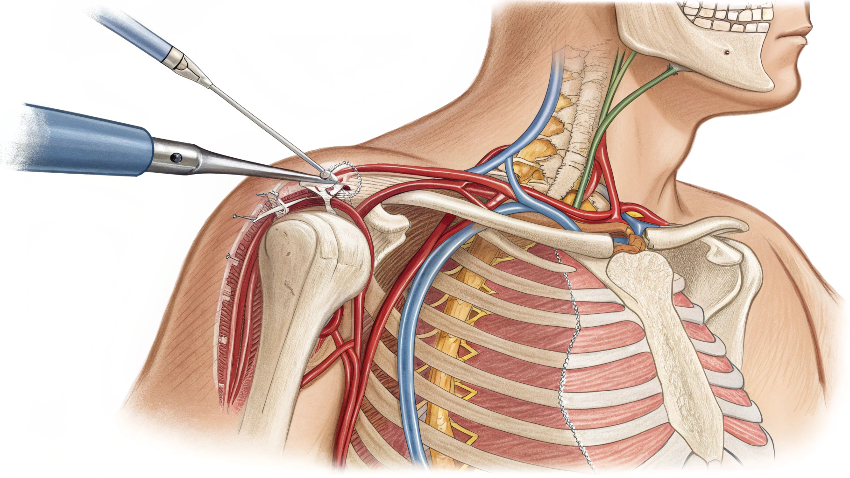
Shoulder pain can make simple tasks like lifting your arm, reaching overhead, or sleeping comfortably feel like insurmountable challenges. For those struggling with shoulder impingement, subacromial decompression surgery offers a modern, minimally invasive solution to relieve pain and restore mobility. Dr. Saurabh Jain, a leading arthroscopic and sports injury surgeon in Lucknow, specializes in keyhole shoulder surgery to relieve pain, helping patients return to their active lives with confidence.
What Is Subacromial Decompression Surgery?
The subacromial space is a narrow area beneath the acromion (a bony projection of the shoulder blade) where the rotator cuff tendons and bursa glide during arm movement. When this space becomes constricted due to bone spurs or inflammation, it causes shoulder impingement, leading to pain and restricted motion. Subacromial decompression surgery widens this space by removing bone spurs or inflamed tissue, using minimally invasive surgery to ease shoulder movement. The procedure, often called arthroscopic acromioplasty, involves small incisions and a camera-guided tool to shave the acromion and clear the bursa, a process known as subacromial bursectomy with decompression. Performed under anesthesia, it typically takes 30–60 minutes, with patients often discharged the same day. This shoulder space widening surgery is ideal for those with chronic impingement unresponsive to non-surgical treatments, offering a durable solution to restore shoulder function.
Causes and Symptoms of Shoulder Impingement
Shoulder impingement occurs when structures in the subacromial space are compressed, irritating the rotator cuff or bursa. Common causes include repetitive overhead motions, such as those in swimming or weightlifting, which inflame the bursa or tendons. Bone spurs on the acromion, often from aging or wear, can narrow the space, while poor posture or weak shoulder muscles increase risk. Approximately 20% of adults experience impingement symptoms at some point, with athletes and manual laborers at higher risk. Symptoms typically develop gradually, starting with a dull ache in the shoulder that worsens with activity. Pain is prominent when lifting the arm overhead or reaching behind, and it may disrupt sleep. Weakness, stiffness, or a grinding sensation during movement are also common. If untreated, impingement can lead to rotator cuff tears or chronic inflammation.
Common Causes
- Repetitive Motions: Overhead activities like throwing or lifting.
- Bone Spurs: Bony growths narrowing the subacromial space.
- Poor Posture: Slouching or weak muscles increasing compression.
Recognizing Symptoms
- Pain: Dull ache worsening with arm elevation or reaching.
- Restricted Motion: Difficulty lifting or rotating the shoulder.
- Night Pain: Discomfort disrupting sleep, especially when lying on the shoulder.
Early recognition ensures timely intervention to prevent further damage.
Diagnosis of Shoulder Impingement
Diagnosing shoulder impingement involves a thorough clinical evaluation and imaging to confirm the condition and rule out other issues like rotator cuff tears. The process begins with a detailed history, noting activities that trigger pain or any prior injuries. Physical exams assess shoulder mobility and strength, using tests like the Neer and Hawkins impingement tests to reproduce symptoms by compressing the subacromial space. These tests are highly specific, helping differentiate impingement from other shoulder conditions. Persistent symptoms or inconclusive findings may prompt further investigation with imaging to guide treatment.
Physical Examination
Physical exams focus on shoulder function. The Neer test involves raising the arm to check for pain, while the Hawkins test rotates the shoulder inward to provoke symptoms. Palpation identifies tenderness over the acromion, and strength tests assess rotator cuff integrity. These non-invasive methods provide critical insights into the impingement’s severity.
Imaging Tests
- X-rays: Detect bone spurs and narrowing in the subacromial space.
- MRI: Provides detailed views of soft tissues and rotator cuff involvement.
- Ultrasound: Assesses dynamic impingement during movement in real time.
Accurate diagnostics ensure a tailored treatment approach.
Treatment Options for Shoulder Impingement
Treatment depends on symptom severity, duration, and patient activity level. Non-surgical options are the first line for mild to moderate cases, while surgery is reserved for chronic or severe impingement. The goal is to relieve pain, restore motion, and prevent recurrence.
Non-Surgical Treatments
Non-surgical approaches aim to reduce inflammation and improve shoulder mechanics. Physical therapy strengthens rotator cuff and scapular muscles, improving stability and reducing impingement. Stretching enhances flexibility, and posture correction alleviates pressure on the subacromial space. Rest and activity modification avoid aggravating motions, while ice and anti-inflammatory measures manage swelling. These treatments are effective for 60–70% of patients with early impingement.
Surgical Treatments
For persistent impingement or structural issues like bone spurs, subacromial decompression surgery is recommended. This shoulder impingement release surgery uses arthroscopic acromioplasty to smooth the acromion and remove inflamed bursa tissue, a process called subacromial bursectomy with decompression. The endoscopic subacromial decompression approach ensures precision through small incisions, minimizing tissue damage and promoting faster recovery.
The Subacromial Decompression Surgery Procedure
The procedure begins with pre-operative planning to ensure optimal outcomes. Patients undergo physical exams and imaging to assess bone spurs or bursa inflammation. Anesthesia (general or regional) is administered for comfort. During surgery, small incisions allow the arthroscope and instruments to access the subacromial space. The acromion is shaved (smoothing the shoulder bone to reduce pain), and the bursa is removed if inflamed. The shoulder keyhole procedure for impingement ensures minimal trauma, with patients typically discharged the same day. Post-operative care focuses on pain management, sling use, and early mobilization to prevent stiffness. Follow-ups monitor healing and guide rehabilitation.
Pre-Operative Preparation
Preparation includes optimizing shoulder strength through physical therapy to enhance recovery. Patients are counseled on anesthesia options and post-op expectations. Medical history is reviewed to minimize risks, ensuring a smooth surgical experience.
The Surgery Step by Step
- Anesthesia: Administered for comfort, typically general or regional.
- Arthroscopy: Small incisions for camera and instruments.
- Acromioplasty: Bone spurs shaved to widen subacromial space.
- Bursectomy: Inflamed bursa removed to reduce irritation.
- Closure: Incisions sutured, shoulder bandaged.
This keyhole treatment for shoulder impingement ensures precision and minimal disruption.
Post-Operative Care
Immediate care includes ice and elevation to reduce swelling, with a sling used for 1-2 weeks to protect the shoulder. Gentle range-of-motion exercises begin early to prevent stiffness, and follow-ups track progress. Pain is managed with prescribed methods, and wound care prevents infection.
Benefits of Subacromial Decompression Surgery
- The minimally invasive surgery to ease shoulder movement offers significant advantages. Small incisions reduce pain, scarring, and infection risk, with most patients resuming light activities within 6–12 weeks. The procedure boasts an 80–90% success rate in relieving impingement symptoms, restoring full shoulder function in 3–6 months. It prevents further rotator cuff damage, making it ideal for athletes or workers needing overhead motion.
- Patients experience improved sleep quality and daily function, whether lifting weights or reaching shelves. The anterior acromioplasty technique allows customization, addressing specific causes like bone spurs or bursitis for optimal outcomes.
Recovery and Rehabilitation After Surgery
- Recovery is phased, starting with swelling reduction and pain control. A sling is used for 1–2 weeks, with gradual arm movement introduced. Physical therapy begins early, focusing on range of motion, followed by strength and stability exercises. Full recovery takes 3–6 months, with return to strenuous activities like sports at 4–6 months.
- Rehabilitation includes rotator cuff strengthening, scapular stabilization, and flexibility exercises. Consistency is crucial, with structured programs preventing re-injury. Patients are guided to avoid premature overhead motions to protect the shoulder.
Immediate Post-Surgery Phase
- The first 1–2 weeks focus on rest, ice, and elevation to manage swelling. Sling use protects the shoulder, while gentle pendulum exercises maintain mobility. Pain is managed, and wound care prevents infection.
Physical Therapy and Rehab
- Therapy starts with passive motion, progressing to active exercises like shoulder rotations. Strengthening targets rotator cuff and scapular muscles, while balance training enhances stability. Later phases include functional drills for sports or work-related tasks.
Timeline for Return to Activities
- 1–2 Weeks: Sling use, reduced swelling, gentle motion.
- 6–12 Weeks: Light activities, improved range of motion.
- 3–6 Months: Full return to strenuous activities.
This timeline ensures safe progression.
Risks and Complications
- Risks include infection (1–2%), stiffness, or persistent pain if rehab is neglected. Nerve damage or anesthesia reactions are rare. Re-injury can occur with premature activity. Choosing an experienced surgeon and adhering to rehab protocols minimizes these risks.
Conclusion
- Subacromial decompression surgery is a transformative solution for shoulder impingement, offering pain relief and restored mobility through minimally invasive surgery to ease shoulder movement. Ideal for athletes, office workers, or anyone with chronic shoulder pain, this procedure ensures lasting results with minimal disruption. In Lucknow, expert care delivers precision and confidence for a pain-free future.
Dr. Saurabh Jain, Arthroscopic and Sports Injury Surgeon in Lucknow