 Call us :-
+91-8004301267
Call us :-
+91-8004301267 Email: info@drsaurabhjain.co.in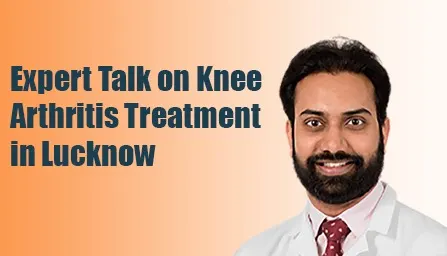
Living with Knee Pain in Lucknow? Here's What an Orthopedic Expert Wants You to Know
If you've been searching for an experienced Orthopedic Doctor in Lucknow, you're not alone. Thousands of residents across Lucknow — from Gomti Nagar to Aliganj, from Hazratganj to Indira Nagar — quietly deal with knee pain every single day.
Some brush it off as "old age." Others manage it with painkillers and hope it disappears.
But knee arthritis is a progressive condition. The longer it's left unaddressed, the harder it becomes to manage.
Dr. Saurabh Jain, a leading orthopedic specialist at Health City Vistaar, Lucknow, sat down to answer the most common questions patients ask about knee arthritis. This is that conversation — simplified, local, and medically responsible.
What Exactly Is Knee Arthritis?
Knee arthritis means the cartilage inside your knee joint is wearing down. Cartilage is the smooth, cushioning layer that keeps your bones from rubbing against each other.
When it wears away, you feel:
- Pain while walking, climbing stairs, or getting up from the floor
- Morning stiffness that takes more than 30 minutes to ease
- A grinding or crackling sensation in the knee
- Swelling around the joint, especially after activity
- A sense of the knee "giving way" under weight
The most common type is Osteoarthritis (OA) — a wear-and-tear condition. It affects people typically above 45, but younger patients with prior injuries or obesity are increasingly being seen in Lucknow clinics.
There are other types too — Rheumatoid Arthritis (RA), which is autoimmune, and post-traumatic arthritis following old injuries.
Why Are So Many People in Lucknow Developing Knee Arthritis?
This is a question Dr. Jain hears constantly. And the answer is deeply tied to local lifestyle patterns.
Lucknow's specific risk factors include:
- Floor-sitting culture — Many homes follow traditional seating habits like sitting cross-legged or on charpoys, which puts repetitive stress on the knee joint over years.
- Stair-heavy architecture — Older homes and multi-storey buildings without elevators in areas like Aminabad, Chowk, and old Lucknow force daily knee strain.
- Winter aggravation — Lucknow's cold winters (December–February) visibly worsen arthritis symptoms. Low temperatures cause muscles to tighten, reducing joint flexibility and increasing pain perception.
- Rising obesity rates — With Lucknow's love for rich Awadhi cuisine, weight gain is common. Every extra kilogram adds roughly 4 kg of pressure on the knee joint.
- Delayed medical care — A cultural tendency to "push through pain" or rely on home remedies leads many patients to reach the clinic at advanced stages.
Understanding these patterns is the first step to prevention and timely treatment.
How Is Knee Arthritis Diagnosed?
Diagnosis is not just an X-ray. At a specialist level, Dr. Jain emphasizes a multi-layered evaluation:
- Clinical history — Understanding pain pattern, duration, and trigger activities
- Physical examination — Testing range of motion, joint tenderness, and muscle strength
- X-rays — To assess joint space narrowing and bone changes
- MRI scans — When soft tissue damage (cartilage, ligaments, meniscus) needs closer evaluation
- Blood tests — To rule out Rheumatoid Arthritis or other inflammatory conditions
Many patients arrive at Health City Vistaar having self-diagnosed from internet searches. A proper clinical evaluation often reveals either a more manageable condition — or one that needs more urgent attention than expected.
Early and accurate diagnosis changes the entire treatment pathway.
Know More About Arthritis TreatmentWhat Are the Treatment Options Available in Lucknow?
Treatment for knee arthritis is not one-size-fits-all. It depends on the grade of arthritis, the patient's age, weight, activity level, and overall health.
Here is how Dr. Jain typically approaches it:
1. Conservative (Non-Surgical) Management — First Line of Treatment
Most patients, especially those with Grade 1 or Grade 2 arthritis, respond well to:
- Physiotherapy — Targeted exercises to strengthen the muscles around the knee, reducing load on the joint
- Weight management — Even losing 5–7 kg can meaningfully reduce knee pain
- Activity modification — Replacing high-impact activities with low-impact ones like swimming or cycling
- Anti-inflammatory medications — Used short-term for pain and swelling control
- Hot and cold therapy — Particularly helpful during Lucknow's winter months when stiffness peaks
2. Injections and Minimally Invasive Procedures
When conservative care is not enough:
- Corticosteroid injections — Provide temporary relief from inflammation and pain
- Hyaluronic acid (viscosupplementation) — Lubricates the joint and can reduce pain for several months
- Platelet-Rich Plasma (PRP) therapy — Uses the body's own growth factors to support joint health; increasingly used in suitable younger patients
3. Surgical Options — When Non-Surgical Care Has Been Exhausted
Surgery is considered only after non-surgical options have been appropriately tried:
- Arthroscopy — Minimally invasive procedure to clean the joint (suitable for select cases)
- Osteotomy — Realigning the knee bone to shift weight away from the damaged area (suitable for younger patients)
- Total or Partial Knee Replacement — Recommended for advanced arthritis (Grade 3–4) where pain significantly impacts quality of life
A Real Patient's Experience — Shared with Permission
"I had been struggling with knee pain for almost three years. I live in Indira Nagar, and even climbing the one flight of stairs to my flat has become difficult. I had visited two other doctors before reaching Dr. Saurabh Jain at Health City Vistaar. What stood out was that he spent time explaining exactly what stage my arthritis was at — Grade 2 — and told me clearly that surgery was not needed yet. We started with physiotherapy and some injections. Within two to three months, I was walking better and had returned to my evening walks in Ambedkar Park. I wish I had come sooner."
— Mrs. Reena Agarwal, 58, Indira Nagar, Lucknow (Shared with patient consent)
This case reflects what Dr. Jain sees frequently — patients who delay care out of fear of surgery, only to discover that timely, structured non-surgical treatment could have helped them much earlier.
Read More ReviewsWhat Can You Do at Home to Protect Your Knees?
Dr. Jain's practical advice for Lucknow residents:
- Avoid prolonged floor sitting — Use chairs or cushioned back support where possible
- Wear supportive footwear — Especially important during long walks or standing-heavy work
- Eat an anti-inflammatory diet — Include turmeric (haldi), ginger (adrak), and omega-3-rich foods; reduce refined sugar and fried foods
- Stay active in winters — Cold weather stiffens joints; light indoor exercises keep them mobile
- Don't ignore early symptoms — Pain that lasts more than two weeks deserves a professional opinion
Small daily habits, consistently followed, make a measurable difference over months.
When Should You See a Doctor Immediately?
Seek urgent evaluation if you notice:
- Sudden, severe swelling in the knee
- Knee that locks or cannot be straightened
- Pain following a fall or accident
- Significant weakness or instability in the joint
- Night pain that disrupts sleep consistently
These are signals that the joint may need more than routine management.
Don't let knee pain control your life. Dr. Saurabh Jain at Health City Vistaar, Lucknow offers personalised, evidence-based care for every stage of knee arthritis. 👉 Book Your Appointment Today
Frequently Asked Questions
Disclaimer: The information provided in this article is for general educational purposes only and does not constitute medical advice. It is not intended to replace a professional consultation, diagnosis, or treatment. Every patient's condition is unique, and treatment decisions should be made in consultation with a qualified orthopedic specialist. Dr. Saurabh Jain and Health City Vistaar do not make any curative guarantees. Please consult your doctor before making any changes to your treatment plan.
