 Call us :-
+91-8004301267
Call us :-
+91-8004301267 Email: info@drsaurabhjain.co.in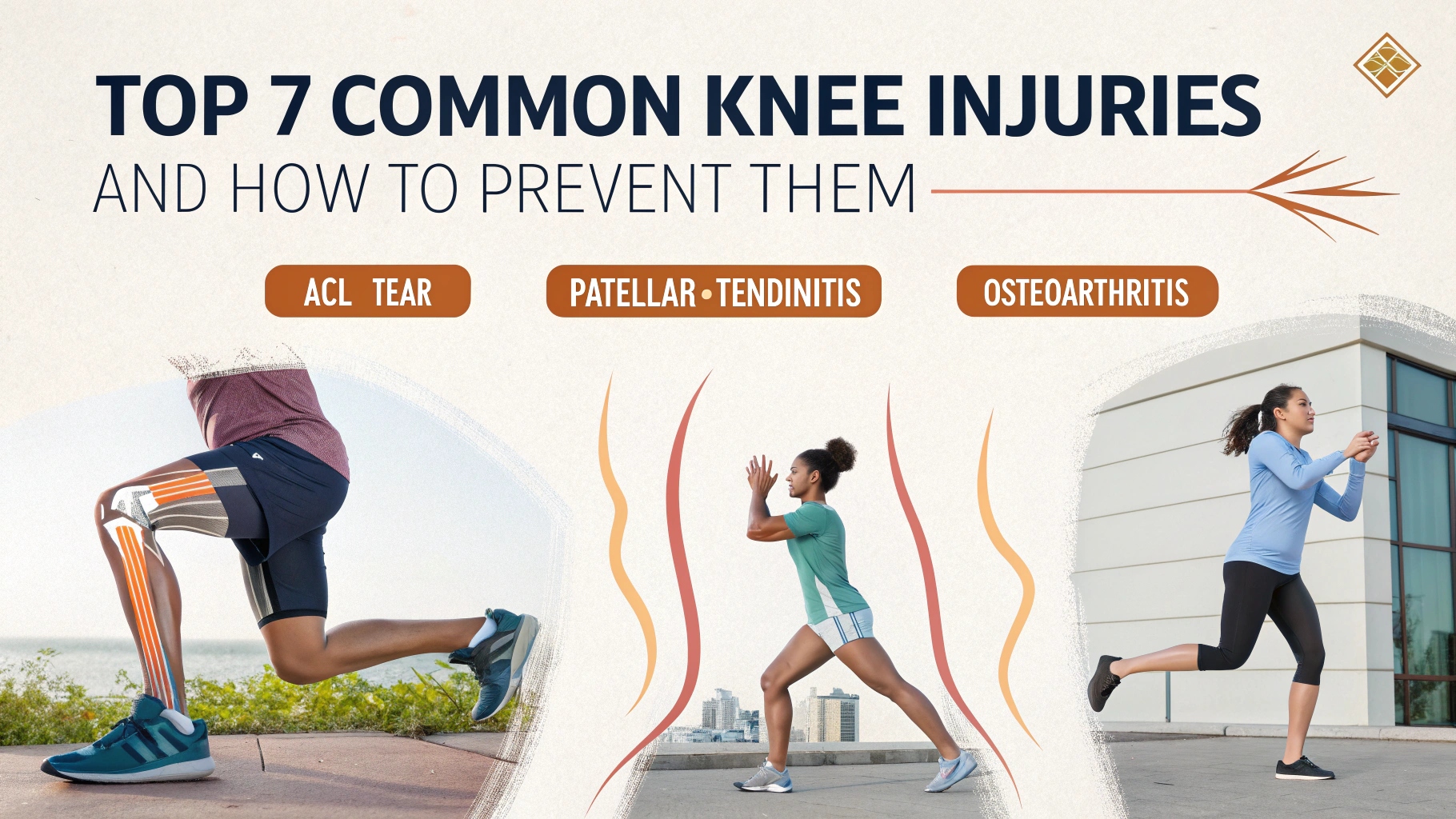
Knee pain is one of the most frequent complaints among athletes, sports persons, and even individuals with sedentary lifestyles. The knee is one of the most important joints in the human body, supporting daily movements such as walking, running, kneeling, and climbing stairs. Because the knee joint absorbs a great deal of stress from both body weight and activity, it is highly prone to injury.
In this detailed guide on the Top 7 Common Knee Injuries and How to Prevent Them, we’ll break down the types of knee injuries, their symptoms, causes of knee pain, and most importantly, knee injury prevention tips to help you maintain healthy knee joints.
Why Knee Injuries Are So Common
The knee joint is a complex joint made up of bones, ligaments, tendons, cartilage, and sacs of fluid that allow smooth movement. The thigh bone (femur), shinbone (tibia), and kneecap (patella) form the main structure. The ligaments (including the anterior cruciate ligament and posterior cruciate ligament) provide stability, while the meniscus cushions the bones.
Because of its complexity, the knee is vulnerable to:
- Overuse injuries from repetitive movements
- Sports-related injuries from sudden stops, twists, or collisions
- Trauma-induced injuries from falls, fractures, or high-impact trauma
- Degenerative changes like osteoarthritis or degenerative meniscus tears
A chronic knee injury or serious knee injury can lead to long-term pain, reduced mobility, and even the need for knee surgery or knee replacement surgery.
Symptoms of Knee Injuries
Recognizing the early symptoms of knee injuries can prevent minor issues from becoming severe injuries. Common warning signs include:
- Swelling and stiffness around the knee joint
- Sharp or dull knee pain when walking, running, or bending
- A feeling that the kneecap dislocates or is unstable
- Popping or grinding sounds when moving the knee
- Difficulty straightening a bent knee
- Reduced strength in the knee muscles
- Pain in the kneecap or patellar tendon
Types of Knee Injuries
Here are the Top 7 Common Knee Injuries and How to Prevent Them:
1. ACL Tear (Anterior Cruciate Ligament Injury)
An ACL injury is one of the most common sports injuries. The anterior cruciate ligament (ACL) helps stabilize the knee joint. When it tears due to sudden stops, pivots, or collisions, it leads to severe instability.
- Causes: Sudden twisting, jumping, or direct impact during sports like soccer, basketball, or football.
- Symptoms: A loud pop sound, immediate swelling, instability, and difficulty walking.
- Treatment: The RICE method (rest, ice, compression, elevation), knee braces, and physical therapy for knee injuries. Severe cases may require knee arthroscopy or surgical intervention.
- Prevention Tips: Strength training for knees, flexibility and stretching exercises, and proper footwear to avoid unsupported shoes.
ACL injuries are serious and often considered a disabling injury, requiring the guidance of an orthopedic doctor or orthopedic specialist.
2. Meniscus Tear
The meniscus acts as a cushion between the thighbone and shinbone. A torn meniscus can occur due to a sudden meniscus tear or gradual wear (a degenerative meniscus tear).
- Causes: Twisting the knee while bearing weight or old trauma.
- Symptoms: Locking of the knee, pain, swelling, and reduced range of motion.
- Treatment: Mild cases may heal with rest and physical therapy, while severe tears may require affordable knee arthroscopy or even knee surgery.
- Prevention: Avoid trauma situations, build strong knee joints, and maintain flexibility.
3. Patellar Dislocation (Dislocated Kneecap)
A knee dislocation occurs when the kneecap slips out of place. This is more common among young athletes. A dislocated kneecap or kneecap fractures can be extremely painful.
- Causes: Sudden changes in direction, falls, or direct impact.
- Symptoms: Visible dislocated knee, swelling, and inability to straighten the leg.
- Treatment: Immediate realignment, knee braces, and sometimes knee surgery if the knee cap dislocates repeatedly.
- Prevention: Strengthen knee muscles and avoid activities that put excessive stress on the kneecap.
4. Runner’s Knee (Patellofemoral Pain Syndrome)
Also known as runner’s knee, this condition affects the kneecap and surrounding tissue. It’s common among athletes and those who kneel frequently.
- Causes: Overuse injuries, poor running form, or unsupported shoes.
- Symptoms: Dull pain around the kneecap, especially when climbing stairs, squatting, or sitting in a bent position.
- Treatment: Rest, patellar tendon exercises, and orthopedic care.
- Prevention: Use proper footwear, avoid torn shoes, and perform strength training exercises.
5. Tendinitis (Jumper’s Knee / Patellar Tendinitis)
Patellar tendinitis, also called jumper’s knee, affects the patellar tendon that connects the kneecap to the shinbone.
- Causes: Repetitive jumping, running, or sudden stress on the patellar tendons.
- Symptoms: Pain and swelling below the kneecap.
- Treatment: RICE method, physical therapy, and sometimes knee braces.
- Prevention: Avoid overtraining, and incorporate strength training and stretching exercises for the knee muscles.
6. Cartilage Damage and Osteoarthritis
Cartilage damage is another serious knee injury that can develop over time. This often leads to osteoarthritis, a chronic degenerative condition.
- Causes: Aging, repeated minor injuries, or untreated joint injuries.
- Symptoms: Chronic stiffness, grinding, and knee pain.
- Treatment: Orthopedic care, knee braces, medication, and in advanced cases, knee replacement surgery.
- Prevention: Low-impact exercises, sports injury prevention, and knee safety strategies.
7. Knee Fractures and Dislocations
Knee fractures, especially kneecap fractures, occur due to high-impact trauma such as accidents or falls. A fractured or dislocated knee is a severe injury that often requires surgical intervention.
- Causes: Trauma occurs in accidents, falls, or sports collisions.
- Symptoms: Intense pain, visible deformity, and inability to move the injured knee.
- Treatment: Emergency orthopedic care, surgery, and rehabilitation.
- Prevention: Protective gear in sports, safe training techniques, and preventive tips for athletes.
Knee Injury Prevention Tips
Preventing common knee injuries is possible with the right approach. Here are essential knee injury prevention tips:
- Strength Training for Knees: Strengthen knee muscles and surrounding areas.
- Flexibility and Stretching Exercises: Improve mobility and reduce stiffness.
- Sports Injury Prevention: Warm up properly before activities.
- Proper Footwear: Avoid unsupported shoes and torn shoes.
- Use Knee Braces or Support: Protect during high-risk sports.
- Avoid Overuse Injuries: Balance training with recovery.
- Consult an Orthopedic Doctor or Physiotherapist: For personalized advice.
Want More Info..
Treatment Options for Knee Injuries
Depending on the severity, treatment may include:
- RICE Method for mild injuries
- Physical therapy for knee injuries to restore mobility
- Knee arthroscopy for ligament or meniscus repair
- Knee braces for support
- Orthopedic care from an orthopedic specialist
- Surgery or knee replacement surgery for severe cases
The Top 7 Common Knee Injuries and How to Prevent Them highlight just how vulnerable the knee joint is. Whether it’s an ACL tear, meniscus tear, patellar dislocation, or chronic knee injury like osteoarthritis, timely recognition and orthopedic care can prevent long-term complications.
The key lies in knee safety, proper training, strength training exercises, and sports injury prevention strategies. If you experience persistent knee pain or have a serious knee injury, consult an orthopedic doctor or the best arthroscopic and sports injury surgeon in Lucknow to ensure accurate diagnosis, advanced treatment, and faster recovery.
Want More Info..
FAQs
- Swelling and stiffness
- Sharp or dull pain around the knee
- Instability or feeling the knee may give way
- Difficulty straightening or bending the knee
- Popping or grinding sounds while moving
